

Minben Calcium
Green Development, Shared Future
As a leading manufacturer of calcium-based materials, Minben Calcium deeply integrates sustainability into its core operations, treating it as an intrinsic driver rather than an isolated initiative. While regulatory compliance serves as our baseline, operational stability and resource optimization are the true anchors of our long-term value.
We implement robust, continuous improvement frameworks spanning production control, raw material maximization, thermal efficiency, and ecological mine restoration. By ensuring uncompromised product quality and supply chain resilience, we systematically decouple business growth from environmental impact.
For Minben, sustainability is not a transient project; it is an enduring governance principle woven into the very fabric of our manufacturing lifecycle, and a profound responsibility we carry into the future.
Sustainability in Action
From Compliance to Regeneration
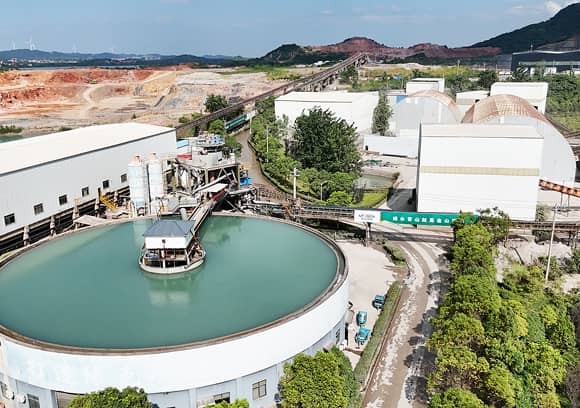
Closed-Loop Water Management
In 2017, Minben prioritized long-term resilience by suspending production for five months to invest RMB 120 million (USD 17.4M) in a tailings separation center. Enabling full internal water recycling and over 95% filter cake utilization, it shifted our environmental strategy from end-of-pipe mitigation to process control.
In resource-intensive industries where production continuity and immediate delivery are often prioritized, environmental overhauls are frequently deferred. Minben chose a bolder path. In 2017, the company voluntarily suspended production for five months and invested RMB 120 million (approximately USD 17.4 million) to construct a state-of-the-art tailings solid-liquid separation center. While this decision created short-term capacity pressures, it solidified a vital long-term corporate conviction: environmental integrity is the bedrock of operational resilience.
By deploying advanced filter press systems, Minben established a fully enclosed production water recycling loop. Today, process water is completely recycled internally, and filter cake utilization exceeds 95%, achieving an operational state characterized as "Zero Liquid Discharge." This project represents a profound shift from passive, end-of-pipe treatment to proactive, process-integrated water stewardship.
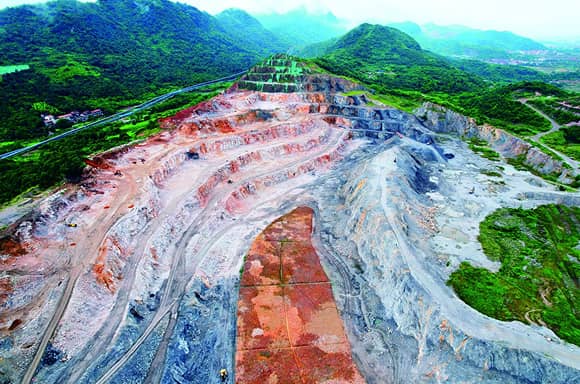
Limestone Resource Optimization
limestone utilization from 85% to 98%. This optimization eliminates approximately 320,000 tonnes of solid waste annually while recovering low-grade materials to generate an additional RMB 12 million (USD 1.8M) in yearly value.
In mining operations, true environmental responsibility begins with the exhaustive utilization of every ton of extracted ore. Maximizing resource efficiency directly eliminates waste at the source and extends the lifecycle of valuable mineral deposits.
Prior to 2018, Minben’s limestone utilization rate hovered around 85%. To address this, the company pioneered a "graded mining and cascade utilization" strategy, precisely matching different ore grades with optimal downstream production phases. This breakthrough propelled the overall utilization rate to an unprecedented 98%, eliminating approximately 320,000 tonnes of solid waste annually. Concurrently, low-grade materials and production by-products are fully reclaimed, generating an additional annual economic value of RMB 12 million (approximately USD 1.8 million). For Minben, resource efficiency is far more than a financial metric; it is a tangible manifestation of a circular production model.
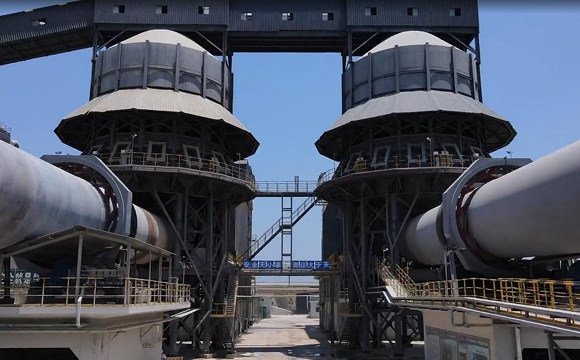
Low-Carbon Kiln Upgrade
In 2020, Minben overhauled its rotary kiln systems with three-stage preheaters and intelligent thermal controls. The upgrade boosted heat recovery by 22%, cut natural gas consumption by 15%, and reduces annual carbon emissions by 18,000 tonnes—translating operational excellence into climate action.
Lime manufacturing is inherently energy-intensive, meaning kiln efficiency dictates both operational performance and carbon intensity. At Minben, energy optimization transcends mere fuel reduction; it is our primary lever for shrinking the carbon footprint of calcium-based materials.
In 2020, Minben executed a comprehensive energy-efficiency overhaul of its rotary kiln systems, integrating advanced three-stage preheaters and intelligent thermal control systems. This upgrade boosted heat recovery efficiency by 22%, slashed natural gas consumption by 15%, and drove unit energy consumption down to a lean 260 kgce per tonne. Internal audits indicate an annual carbon emission reduction of approximately 18,000 tonnes. By optimizing thermal dynamics at the heart of our operations, Minben successfully translates day-to-day manufacturing improvements into meaningful climate action.
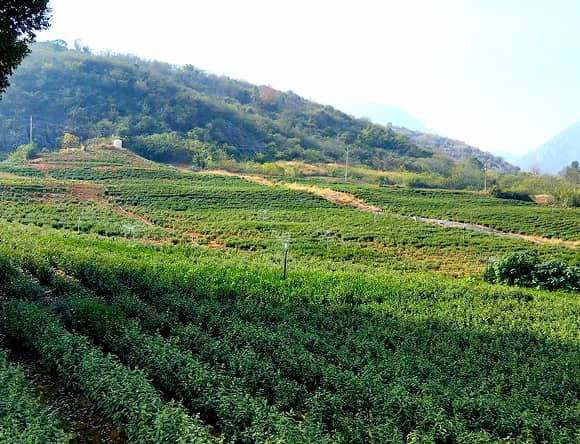
Ecological Land Regeneration
In 2022, Minben launched a village-enterprise partnership to convert underutilized land near mining areas into a large-scale ecological tea plantation. Combining corporate capital and agronomic expertise with local resources, the project revived land productivity and catalyzed community income growth.
Sustainable mining extends beyond mitigating operational impacts; it encompasses restoring land vitality post-extraction to cultivate long-term opportunities for local communities.
In the areas surrounding our mining operations, historic mining activities and labor migration had left substantial tracts of land underutilized, despite the region's favorable climate and rare, selenium-rich soil. In 2022, Minben stepped in to reshape this landscape through an innovative village-enterprise cooperation model. The company injected capital and agronomic expertise, while local communities contributed land and labor to establish a collaborative, large-scale tea plantation. This initiative successfully revived the land's ecological and productive functions, catalyzed local employment, and stimulated collective income growth. For Minben, land reclamation is not merely about restoration—it is about eco-regeneration, turning idle terrain into a self-sustaining fountain of ecological, economic, and social value.
Distributed Solar Power
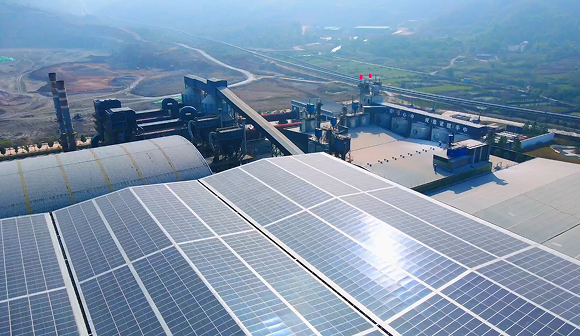
In 2025, Minben deployed a 5,300 kWp distributed rooftop photovoltaic system across its facilities. Operating on a self-consumption model with surplus grid-feeding, it generates 5.8 million kWh annually, increasing clean energy share to power our transition toward low-carbon manufacturing.
To systematically diversify and decarbonize its energy profile, Minben capitalized on its infrastructure in 2025 by deploying a 5,300 kWp distributed rooftop photovoltaic system across its mining and plant facilities.
Operating under a smart "self-consumption with surplus power grid-feeding" architecture, the array generates roughly 5.8 million kWh of clean electricity annually. This renewable power directly offsets the facility’s production load, substantially reducing dependence on the external grid. The seamless integration of solar energy marks a pivotal step in steadily expanding our clean energy share, reinforcing Minben’s long-term transition toward low-carbon, smart manufacturing.